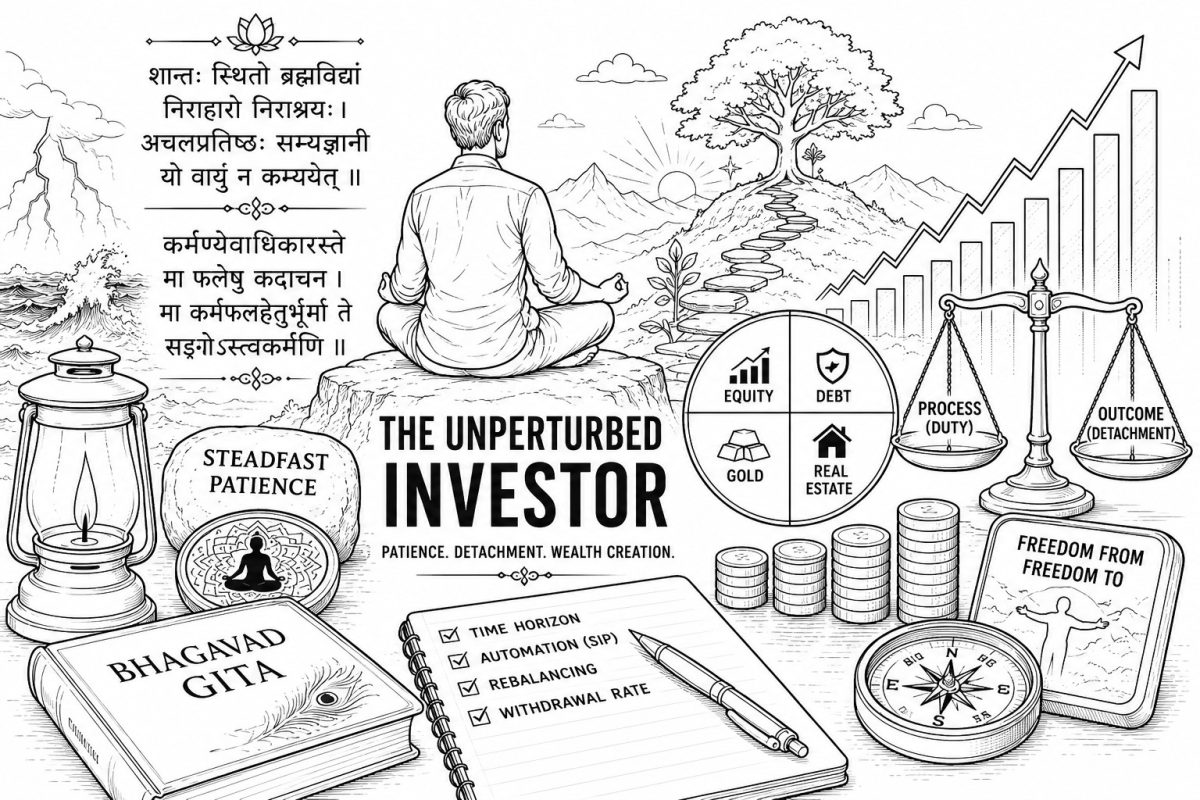

शान्तःस्थितोब्रह्मविद्यांनिराहारोनिराश्रयः।
अचलप्रतिष्ठःसम्यग्ज्ञानीयोवायुंनकम्पयेत्॥
Like the flame of a candle stays steady amid wind, the wise remain unperturbed amid tensions and volatility. — Bhagavad Gita (6.19)
कर्मण्येवाधिकारस्तेमाफलेषुकदाचन।
माकर्मफलहेतुर्भूर्मातेसङ्गोऽस्त्वकर्मणि॥
Your right is only to perform your duty, not to claim its fruits. Never consider yourself the cause of results, nor be attached to inaction — Bhagavad Gita (2.47)
The Twin Pillars of Investing Wisdom
These two profound verses from the Bhagavad Gita encapsulate the essence of successful investing:
1. Steadfast Patience – Remaining composed like an unshaken flame amid market storms
2. Detached Discipline – Focusing on the process (asset allocation) rather than obsessing over outcomes
Modern investing literature is filled with complex strategies, but the greatest investors in history—Warren Buffett, Charlie Munger, John Templeton—all practiced these ancient principles in modern markets.
- Part I: The Market as a Test of Temperament
Behavioral finance reveals that the biggest destroyer of wealth isn’t poor stock selection but emotional decision-making:
- Panic selling during crashes (2008, 2020)
- Greed-driven speculation (Dot-com bubble, Crypto manias)
- The relentless chase for “the next big thing”
The Patient Investor’s Advantage:
✓ Buys when others are fearful
✓ Holds through volatility
✓ Sells based on logic, not emotion
Historical data shows that missing just the 10 best days in the market over 20 years can reduce returns by nearly 50%. Patience isn’t just virtuous—it’s profitable.
- Part II: The Gita’s Investing Framework – Nishkama Karma in Action
Lord Krishna’s advice to Arjuna applies perfectly to asset allocation:
1. Your Duty (Dharma): Create a balanced portfolio (equities, debt, gold, real estate)
2. Right Action: Invest systematically (SIPs, dollar-cost averaging)
3. Detachment: Accept that short-term returns are beyond your control
Modern Application:
- A 60:40 equity-debt portfolio has weathered every market cycle
- Rebalancing enforces the discipline of “buying low and selling high”
- Automation removes emotional interference
The Higher Purpose of Wealth: Freedom Through Detachment
True financial success isn’t measured in bank balances but in:
1. Freedom From: Stress, unfulfilling work, and dependency
2. Freedom To: Pursue meaningful work, spend time with family, and contribute to society
The Gita’s concept of vairagya (detachment) teaches us:
- Wealth is a means, not an end
- “Enough” must be consciously defined
- The ultimate wealth is needing less
The Practitioner’s Guide
1. Time Horizon: Think in decades, not quarters
2. Automation: Set SIPs and forget (let compounding work)
3. Rebalancing: Your annual “check-up” to maintain allocation
4. Withdrawal Rate: The 4% rule for sustainable income
Conclusion: The Yogi and the Investor
The perfect investor mirrors the Gita’s ideal:
- As steady as a flame in wind (unshaken by volatility)
- As disciplined as an archer (focused on process, not prizes)
- As detached as a sage (using wealth without being used by it)
“When your money works for you instead of you working for money, that’s not just financial freedom—that’s moksha from economic slavery.”